



 Find Your Local Builder

🏷 Awning Extension
-

Sep 22, 2026
-

6 min read
One Local Team: From Design to Handover
Local shed builders should offer more than a finished structure. At R&F, one connected local team stays involved from the first conversation through design, engineering, fabrication, delivery, construction and handover.
One Local Team: From Design to Handover
Choosing local shed builders is about more than finding someone who can put a building on your site.
From the first conversation to handover, we keep the process connected — so the building you end up with makes sense from the ground up.
A shed might look straightforward once it’s finished. But getting from the first conversation to a completed building involves a lot of moving parts – design, engineering, foundations, steel fabrication, delivery and construction.
At R&F, we believe those parts work better when they’re connected.
That’s why we work as one local team from design through to handover, with the people involved in your project working together rather than treating each stage as a separate transaction.
Local Shed Builders Start With a Conversation
Before we start talking about steel, doors or dimensions, we want to understand what you’re actually trying to achieve.
Is it machinery storage? A hay shed? A workshop? More room for the business? Protection for vehicles or equipment? Or simply a building that gives you more options for what’s next?
Those conversations help shape the design.
The building needs to work for the way you intend to use it, but it also needs to respond to the site, access, terrain, foundation requirements and practical realities of construction.
That’s one of the advantages of working with local shed builders who understand the project in the context of where it’s being built, rather than treating the building as a standard product that simply needs to be delivered.
Design Is Where the Process Starts
A good building project needs more than a drawing.
The design needs to take into account the building’s intended use, dimensions, openings, site conditions, structural requirements and the way the building will ultimately be constructed.
Our How We Build process brings these considerations together from the beginning, helping connect the decisions made during design with what happens later on site.
That connection matters.
A change made during design can affect engineering. Engineering can affect fabrication. Fabrication affects delivery and construction.
The earlier those things are considered together, the fewer surprises there are later.
The Site Is Part of the Design
The building doesn’t exist in isolation from the ground beneath it.
Site levels, soil conditions, drainage, access and the requirements of the foundation all form part of preparing for construction.
Our approach to shed foundations looks at the foundation as part of the overall building, with reinforced raft slabs, engineered piers and structural connections designed to suit the site and building requirements.
It’s another reason the process needs to be connected.
The people planning the building need to understand what the site requires, and the construction team needs to understand what has been designed.
The Steel Frame Is Part of the Same System
The same applies to the steel structure.
The portal frame isn’t simply another component that arrives on site. Its design, fabrication and connection to the foundation all need to work together.
R&F uses welded portal frames rather than a bracketed shed system, with the structural approach considered as part of the building.
The result is a process where the building is designed with construction in mind, rather than treating each stage as something that happens independently.
From Design to Local Fabrication
Once the design and engineering are established, the steel needs to be produced accurately and ready for the build.
This is where our approach to Australian steel and local fabrication becomes part of the bigger picture.
The steel components need to match the design and arrive ready for the next stage of the process.
Keeping fabrication connected to the overall project helps our team maintain visibility of what’s being produced and what is required for construction.
It’s not about making every part of the process happen in the same place.
It’s about making sure the parts work together.
Delivery Is Part of the Build
Getting a building to site isn’t simply a matter of putting steel on a truck.
Materials need to arrive when they’re required, in the right quantities and in a way that works with the construction program.
That’s particularly important across regional Queensland, where sites can be a long way from fabrication facilities and access can vary considerably from one project to the next.
The delivery needs to work with the build.
The build needs to work with the site.
And the site needs to have been considered from the beginning.
When those things are coordinated, the process becomes much more straightforward for everyone involved.
Building On Site With One Local Team
Once the materials arrive, the project moves from planning to construction.
But the construction team shouldn’t be seeing the project for the first time when the truck arrives.
They need to understand the design, the site and what has been planned before construction begins.
That’s where having local shed builders who stay connected to the project makes a difference.
The people involved in the project are working from the same information and towards the same finished building.
And because R&F remains involved across the process, questions don’t have to disappear into a chain of unrelated businesses before someone works out who needs to answer them.
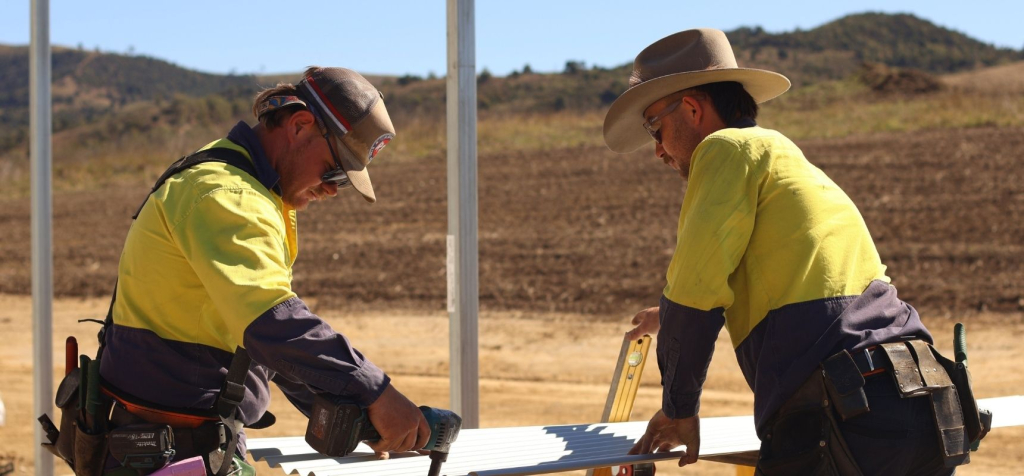
IMAGE — Gatton’s Build Crew Building a Custom Shed & Workshop in Flagstone Creek
Designed around the site, with the shed built first as part of a larger rural property plan.
View the Flagstone Creek project →
One Team Doesn’t Mean One Person Does Everything
There are specialists involved in any good building project.
Engineers have their role. Fabricators have their role. Construction crews have their role. Transport has its role.
A one-team approach doesn’t mean one person does all of those jobs.
It means the different people responsible for those stages are connected.
That makes it easier to communicate, identify issues early and keep everyone working towards the same outcome.
For the customer, it also means there is a clear team behind the project rather than a series of separate transactions.
From First Conversation to Handover
By the time we reach handover, the finished building should make sense in the context of the conversation that started it all.
The size.
The layout.
The doors.
The structure.
The foundation.
The site.
The way it’s going to be used.
All of those decisions should have a reason behind them.
Because a building isn’t successful simply because it’s standing at the end of the job.
It needs to do what you needed it to do when you first started looking for one.
One Local Team. From Design to Handover.
That’s the value of working with local shed builders who stay connected to the project.
From the first conversation and design, through engineering, foundation planning, local fabrication, delivery and construction, R&F stays involved in bringing the pieces together.
One local team. One connected process. A building designed for what comes next.
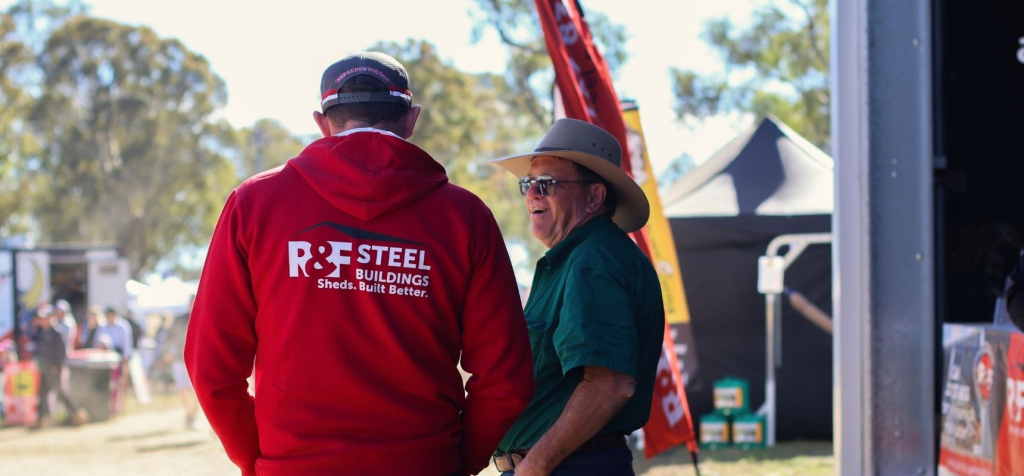
IMAGE — Local R&F Teams and Head Office Working Together
R&F teams from Gatton, Toowoomba, Warwick, Dalby and Head Office working together to support projects from design through to handover.
Written by

R&F Steel Buildings
R&F Steel Buildings brings together the experience of our local Queensland distributor network to share practical advice, design considerations and insights to help you plan your next steel building.


 Previous Post
Newsletter
Follow Us
Table of Contents
 Call Us