



 Find Your Local Builder

🏷 Materials and Fabrication
-

Sep 22, 2026
-

6 min read
Australian Steel & Local Fabrication: What Happens Before Your Shed Arrives on Site?
Before an R&F shed arrives on site, there’s a lot that has already happened. Australian steel, trusted suppliers, local fabrication and carefully prepared components all come together before construction begins.
The steel arriving at your property is the result of a lot more work than simply cutting lengths and putting them on a truck.
At R&F, we work with established Australian steel suppliers and trusted local fabricators to turn engineered designs into the components that make up your building.
From the steel itself through to the welded portal frames, purlins, girts and other components, much of the work happens before the first truck arrives at your property.
That matters because a well-planned building starts long before construction day.
Australian Steel Starts With Trusted Supply
Relationships matter in the building industry.
They matter even more when you’re working across regional Queensland, where reliability, communication and knowing who you’re dealing with can make a real difference to keeping a project moving.
R&F started in 2005 in the Lockyer Valley, and those early relationships with Australian suppliers helped establish the way we still approach our buildings today.
Our buildings use Australian BlueScope Steel, with genuine COLORBOND® steel and LYSAGHT® products forming an important part of the R&F building system.
We also work with established Australian suppliers across other components of our buildings, including glazing, doors and building products.
These relationships aren’t simply about putting familiar names on a specification.
They are about having supply partners we know, established processes and materials we can confidently build into an engineered structure.
What Happens Before the Steel Reaches Your Site?
There is a significant amount of work between an approved design and a truck arriving at your property.
Your building starts with its engineered design, but that design then needs to be translated into the individual steel members and components required to construct it.
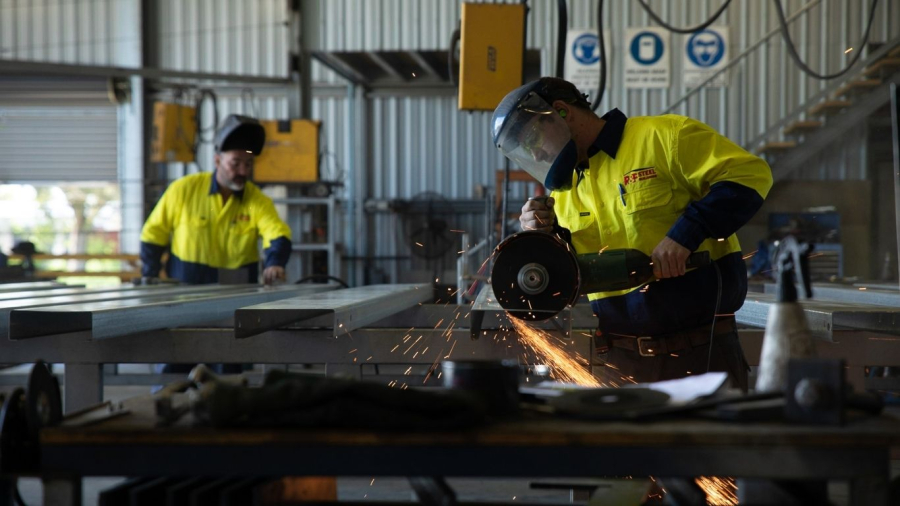
The steel needs to be cut, prepared, fabricated and, where required, welded into the components that form the building frame.
This is where our local fabrication network becomes an important part of the process.
Rather than treating fabrication as something separate from the building, R&F works with experienced Queensland fabricators who understand the systems and standards required for our buildings.
Local Fabrication, Before Construction Begins
The main steel components of an R&F building are prefabricated and welded locally before being delivered to site.
That means important fabrication work can be completed in a controlled environment before construction begins.
Portal frame components can be prepared, welded and checked before they arrive at the property, ready to be assembled as part of the building system.
For the customer, the benefit isn’t simply that the steel has been “made locally”.
It means more of the work can be completed before the construction team reaches your site, helping the build process run in a more controlled and organised way.
It also means our local teams aren’t starting with a pile of raw steel and trying to turn it into a building on the property.
The fabrication has already happened.
Experience Doesn’t Stop at Steel
One of the strengths of the R&F network is that our local teams bring practical building experience from a range of backgrounds.
Across the network, you’ll find people with experience in areas such as construction, fabrication, earthworks and other trades.
That experience matters because building a shed isn’t just about knowing how to assemble steel.
It’s understanding how a building comes together on a real property.
Access.
Ground conditions.
Materials.
Equipment.
Weather.
Construction sequencing.
The way the building will actually be used.
Every R&F location operates independently in its local market, but is supported by shared engineering systems, established suppliers and a proven building process. That’s the balance we’re aiming for: local accountability backed by something bigger.
Welded & Bolted Portal Frames
The portal frame is one of the most important components of a steel building.
At R&F, our portal frame systems are welded and bolted rather than relying on bracketed connections.
The main frame components are fabricated before they arrive on site, with the welded components then assembled and bolted as part of the construction process.
This approach is different from the bracketed shed systems commonly used in some parts of the market.
If you want to understand the difference in more detail, we’ve compared the two approaches here:
Welded Portal Frames vs Bracketed Shed Systems
The point isn’t simply that one component looks different from another.
It’s about understanding how the frame has been designed, fabricated and assembled as part of the overall building system.
From Fabrication to Your Site
Once the components have been fabricated, they still need to get to the right property, in the right sequence and in a form that makes sense for the construction team.
That’s where planning and logistics become just as important as fabrication.
R&F kits are delivered across most of Queensland using self-unload trucks, with the materials prepared for the next stage of the build.
Our network’s established supply and delivery processes contribute to a 95% on-time, in-full delivery rate (DIFOT) across the state.
For a customer, that means something quite simple:
When the building is ready to start, you want the materials you need to be there.
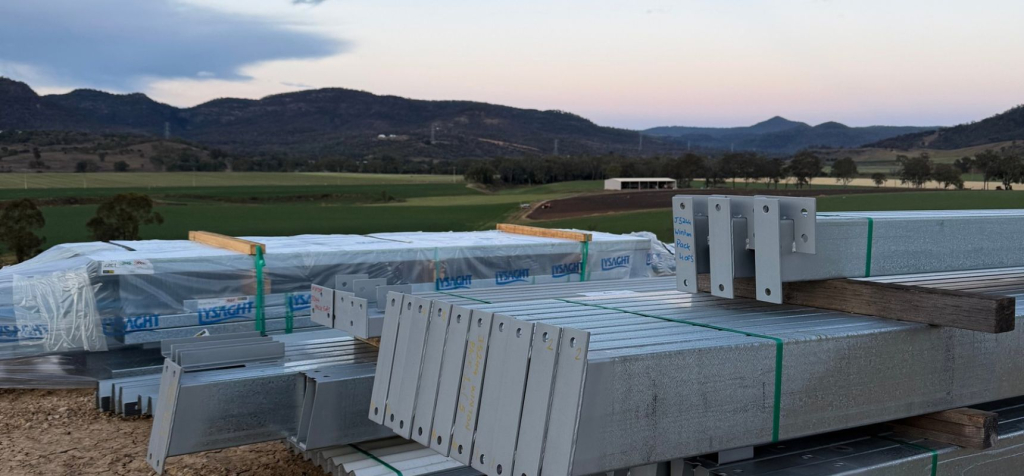
IMAGE — Custom Shed & Workshop in Flagstone Creek
Designed around the site, with the shed built first as part of a larger rural property plan.
View the project →
Local Doesn’t Mean Starting From Scratch
There can be a misconception that choosing a local builder means everything is sourced and made independently from the ground up.
That’s not how the R&F model works.
Our local teams have the advantage of being close to the customer and understanding their local conditions, while benefiting from established Australian suppliers, shared engineering systems, proven fabrication processes and the buying power of the wider R&F network.
It’s a combination that has grown with R&F — from where we started in the Lockyer Valley to our network across Queensland and now into the Northern Territory.
Local people. Australian steel. Established suppliers. Shared systems.
If you’d like to understand more about what sits behind the R&F approach, Why R&F is different → brings those elements together.
That’s what sits behind the steel that eventually arrives at your site.
Before the First Bolt Goes In
By the time the first truck arrives, your shed has already been through a long process.
The site has been considered.
The building has been designed and engineered.
Steel has been sourced.
Components have been fabricated.
Portal frames have been welded and prepared.
Materials have been organised for delivery.
And your local R&F team is ready to put the system together on site.
That’s the part of building a shed you don’t necessarily see.
But it’s a big part of what makes the construction process work.
Because when your shed arrives on site, the job isn’t starting from scratch.
A lot of the work has already been done.
See the Difference in the Finished Building
The best way to understand what goes into an R&F building is to look at the finished result.
Every project has its own requirements – from the site and foundations through to the size, layout, openings and way the building will be used. The steel, fabrication and construction process needs to work together from the beginning.
We’ve worked on everything from rural and agricultural buildings to workshops, commercial structures and purpose-built facilities across Queensland.
Explore some of the projects we’ve delivered and see how the details come together on site.
Written by

R&F Steel Buildings
R&F Steel Buildings brings together the experience of our local Queensland distributor network to share practical advice, design considerations and insights to help you plan your next steel building.


 Previous Post

Newsletter
Follow Us
Table of Contents
 Call Us